
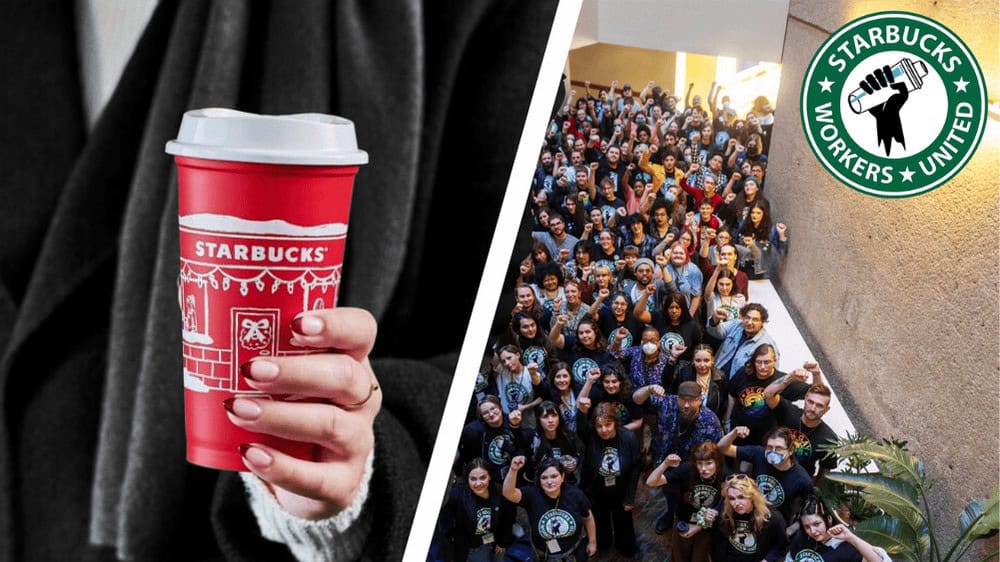
Workers strike during the coffee giant’s busiest promotional day, drawing support from elected officials in Seattle and New York
The week leading up to Starbucks’ Red Cup Day looked nothing like the company hoped. Instead of lines around the block for free holiday tumblers, baristas at 65 stores walked off the job on November 14. And this time, they brought elected officials with them.
Seattle Mayor-elect Katie Wilson showed up at picket lines outside the company’s Reserve Roastery on November 13, publicly calling for a Starbucks boycott just days after winning her race. New York City Mayor-elect Zohran Mamdani went further, urging his followers to boycott Starbucks and stating he wouldn’t buy from the chain while workers remained on strike.
The timing wasn’t accidental. Starbucks Workers United, the union representing baristas at over 500 stores, coordinated the walkout to hit the company during its highest-traffic promotional event of the year. They called it the “Red Cup Rebellion.”
Why Politicians Are Getting Involved
Labor disputes at major retailers rarely draw this kind of political attention. But Starbucks is different. The company built its brand on progressive values and employee benefits, making labor tensions particularly visible when they surface.
U.S. Senator Patty Murray sent an official letter to Starbucks CEO Brian Niccol on November 12, urging good faith negotiations with the union ahead of the strikes. Murray represents Washington state, where Starbucks is headquartered and remains a significant employer.
Wilson, Seattle’s incoming mayor, didn’t just send a letter. She joined striking baristas at the Reserve Roastery and led chants supporting worker rights. For a mayor-elect to publicly back a boycott of one of her city’s most prominent companies signals how much the political calculus around labor has shifted.
Mamdani’s stance was equally direct. “No contract, no coffee,” he posted, making clear he wouldn’t patronize Starbucks until workers had a deal.
What Workers Are Actually Fighting For
The strikes aren’t about a single issue. Workers are pushing for higher wages, more predictable schedules, and better staffing levels. But the deeper tension is about bargaining timelines.
Since the first Starbucks store unionized in 2021, the company has been in contract negotiations with Workers United for over two years. More than 500 stores have unionized, but none have finalized a contract. That’s created frustration among workers who voted for representation but haven’t seen concrete changes.
The union timed the Red Cup Day action to maximize pressure. Red Cup Day is one of Starbucks’ biggest promotional events, driving massive foot traffic as customers line up for free reusable holiday cups. Walkouts on that day cost the company not just in lost sales, but in brand perception during a critical moment in the holiday season.
Niccol’s Challenge
Brian Niccol took over as CEO in September 2024, inheriting a company already deep in labor disputes. His tenure at Chipotle was marked by operational improvements and growth, but Starbucks presents a different challenge. Labor relations aren’t just an operational issue here. They’re central to the brand.
The political pressure adds another layer. When elected officials publicly back boycotts and join picket lines, it’s not just bad PR. It signals that labor issues at Starbucks have become a litmus test for progressive politicians, particularly in cities like Seattle and New York where the company has deep roots.
What It Means for Retail
Starbucks isn’t the only retailer dealing with union activity, but it’s become the most visible test case. How Niccol handles this will send signals across the industry about whether major chains can maintain both a progressive brand image and resistance to union contracts.
The involvement of elected officials raises the stakes. Wilson and Mamdani aren’t fringe candidates. They won major mayoral races and bring labor issues into the mainstream political conversation in ways that make it harder for companies to wait out union pressure.
For Starbucks, the question is whether the cost of continued labor disputes outweighs the cost of reaching agreements. Red Cup Day was supposed to be about holiday cheer and brand momentum. Instead, it became a referendum on whether the company can live up to the values it markets.
The answer to that question will likely determine how long “no contract, no coffee” remains a rallying cry.