For HR leaders overseeing hourly teams, the pressure no longer stops at filling open shifts. The real challenge now sits in managing the chaos that surrounds those roles: sudden compliance audits, unexpected turnover spikes, and labor data that never seems to match up across dozens—or hundreds—of locations. That operational fragility gets worse when you zoom out. Nearly half of all hourly workers, 49 percent, say they plan to leave their current job within the next year. Managing that kind of volatility with spreadsheets and outdated tools creates dangerous blind spots. You lose visibility into the one asset that actually moves the business forward: your people. The good news? A new wave of workforce technology is shifting from reactive scheduling to something far more intelligent: predictive, adaptive, and built around the employee experience. This article maps out the trends HR directors need to master in order to lead large, multi-location workforces with confidence.
The HR Director Role Has Changed More Than Most Realize
The struggle for most HR directors isn’t understanding workforce strategy. It’s finding enough time, the right tools, and reliable data to execute that strategy consistently across every location. Over the last few years, the role has quietly transformed. You’re now expected to manage hybrid hourly teams, navigate ever-tightening labor regulations, and stem retention issues that refuse to fade. Modern workforce management technology steps in here. It handles the repetitive administrative load, freeing you to focus on strategic direction rather than tactical firefighting. That shift moves HR from a support function into a genuine business driver.
Workforce Management Software Trends Worth Paying Attention To
Not every shiny feature matters. The trends that deliver real ROI are the ones that reduce complexity for HR teams while genuinely improving daily life for frontline employees.
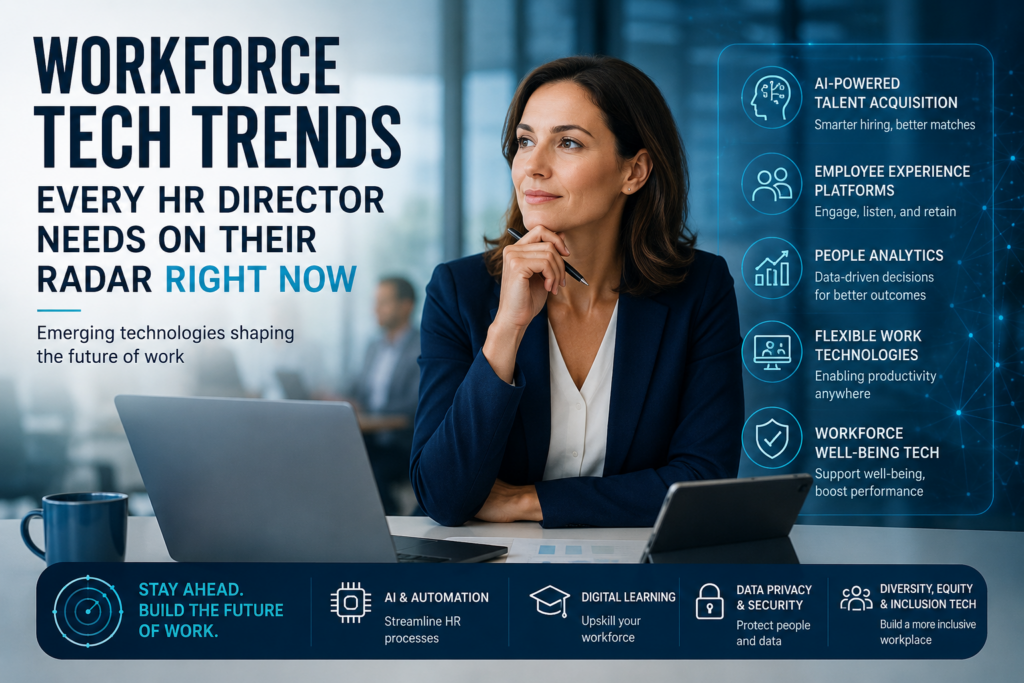
AI and Automation That Actually Understands Your Workforce
Artificial intelligence now powers demand forecasting and scheduling in ways that learn continuously from real demand signals, not just historical averages. AI assistants work alongside managers inside their existing workflows, offering context, explanations, and suggested next steps. This isn’t automation for the sake of automation. It’s about making sure labor plans align with demand, compliance rules, and employee preferences without someone manually adjusting shifts every single week. For HR directors, that capability turns scheduling from a recurring headache into a strategic lever that controls labor costs almost silently in the background.
Employee Experience Stops Being a Buzzword
Modern platforms give workers more say over when and how they work. That sense of control directly feeds into retention. When employees feel heard and respected, they stick around. And keeping people longer avoids the punishing cost of constant recruiting and training cycles.
Mobile and Self-Service Become the Default
Mobile-first tools let managers and employees handle schedules, time-off requests, and timecards from anywhere. Self-service removes managers from the middle of routine tasks like shift swaps and approval chains. That reduction in administrative noise lowers manager burnout and speeds everything up.
Decisions Driven by Analytics, Not Guesswork
Real-time dashboards surface actionable labor insights now—not at the end of the month when it’s too late to fix anything. HR directors can watch KPIs move and intervene mid-cycle, catching expensive overtime or coverage gaps before they hit payroll.
Integrated Ecosystems That Create a Single Source of Truth
When payroll, time tracking, and scheduling talk to each other, the data discrepancies that trigger compliance risks and payroll errors largely disappear. No more stitching together reports from three different systems.
What HR Directors Actually Gain from Modern WFM Technology
The investment isn’t theoretical. The impact shows up in concrete ways.
- Compliance that runs in the background. Labor laws get enforced proactively, cutting penalty risk and protecting the brand.
- Administrative work shrinks. Routine tasks come off managers’ plates, giving them back time to lead and develop their teams.
- Stability improves across the workforce. Better retention means lower hiring costs and more institutional knowledge stays inside the company.
- Visibility spans the entire organization. A real-time view across all locations enables faster, smarter decisions.
- Costs get controlled before they happen. AI-driven forecasting stops labor overruns in their tracks, not after the damage is done.
How Smart HR Leaders Put WFM Tools to Work
The technology becomes powerful when it’s applied deliberately.
Centralized Reporting That Surfaces Trouble Quickly
Track absenteeism, overtime, and scheduling conflicts from one dashboard. When a metric slides below target, you see it immediately—no waiting for a monthly report.
Intelligent Scheduling That Respects the Whole Person
Good tools match shifts not just to demand, but to skills, availability, and even employee preferences. Consider the real-world impact: ALDO Group cut schedule creation time by 66 percent after implementing Legion WFM. That’s not just efficiency. It means managers stepped out of the back office and back onto the floor, coaching teams and driving performance.
Leave Management That Ties Directly to Financial Wellness
Accurate leave approvals sync with payroll, eliminating errors. There’s also a retention angle. At ALDO Group, employees who used Legion InstantPay showed 72 percent better clock-in performance compared to non-users. Financial flexibility directly influenced reliability.
Workforce Analytics That Shape Strategy, Not Just Reports
Spot trends, gaps, and opportunities across the entire organization. The data helps HR directors improve both operational performance and the employee experience at the same time.
Best Practices for Rolling Out WFM Software
Implementation makes or breaks the investment. A few principles hold up across industries.
- Match the technology to your actual workforce challenges, not a generic checklist
- Secure buy-in early from HR, Finance, and Operations—not just one department
- Lean on pre-built compliance templates to reduce setup time and risk
- Train both managers and employees thoroughly to drive real adoption
- Pilot in a few locations before scaling across the entire organization
- Track KPIs continuously and refine your approach as you learn
Cutting Through Vendor Noise Without Losing Your Mind
HR directors rarely choose technology alone. IT, Finance, and Operations all weigh in. That makes it essential to focus on solutions that genuinely reduce complexity, not add another layer of it. More features rarely equal more value. What actually matters for HR? Simplicity, rapid adoption, and measurable impact. Long feature lists rarely translate into better outcomes.
Features Worth Prioritizing
- AI-powered scheduling that adapts to real demand
- Advanced analytics with real-time visibility
- Mobile self-service that your workforce will actually use
- Seamless integrations with existing payroll and HR systems
- Robust compliance support built in, not bolted on
Questions to Ask Any Vendor
- How does the platform handle scaling across dozens or hundreds of locations?
- What does support and customization really look like after the contract is signed?
- How easy is it for a frontline manager to adopt this without extensive training?
Workforce Tech That Puts HR Directors in the Driver’s Seat
Modern workforce management has to move past basic efficiency and compliance checklists. The real opportunity for HR directors lies in adopting technology that transforms their role from operational administrator to strategic leader. It’s not about collecting another tool to handle tasks. It’s about deploying a platform that converts workforce data into business direction, enabling HR to push the entire organization forward—not just keep the lights on.
[ad_2]