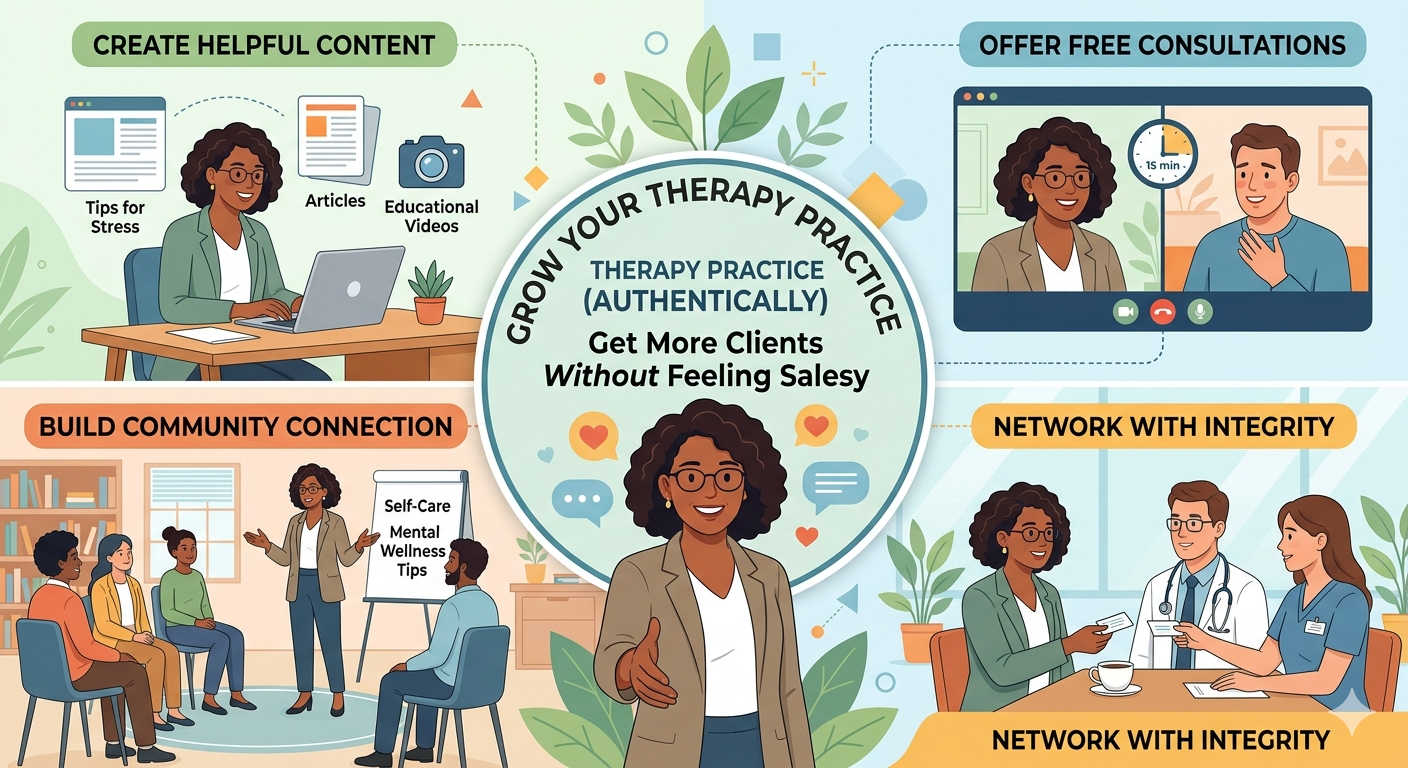
How to Get More Therapy Clients: 7 Ethical Marketing Strategies
Building a successful therapy practice requires more than clinical expertise. Many therapists spend years developing their skills but discover that attracting new clients requires a completely different set of skills: visibility, communication, and relationship building.
If your schedule has open appointment slots or your online profile is not generating consistent inquiries, the solution is not to become a salesperson. Effective marketing for therapists is about helping the right people find you, understand your approach, and feel confident reaching out.
This guide explains practical strategies therapists can use to improve their online presence, build referral relationships, create valuable content, and attract clients in an ethical and sustainable way.
1. Improve Your Online Presence So Potential Clients Can Find You
For many people searching for therapy, the first interaction they have with a therapist is online. Before making a call or sending an email, potential clients usually research your website, professional profiles, reviews, and approach to treatment.
Your online presence does not need to be complicated. It needs to answer three important questions quickly:
- Who do you help?
- What challenges do you specialize in?
- What can a client expect when working with you?
Optimize Your Google Business Profile
A complete Google Business Profile can help local clients discover your practice when they search for therapy services in their area.
Make sure your profile includes:
- Your correct practice name and contact details
- Services you provide
- Your office location or service area
- Professional photos
- Business hours
- A clear description of your therapy approach
Use your description to communicate your personality and expertise. Instead of writing only general statements like “I provide a safe and supportive environment,” explain who you work with and what problems you help clients overcome.
Create a Website That Builds Trust
Your website does not need hundreds of pages. A simple, well-written website can be more effective than a complicated one if it creates trust.
Your homepage should clearly communicate:
- The type of clients you support
- Your areas of specialization
- Your therapy philosophy
- How someone can schedule an appointment
Your About page is especially important. Clients are not only choosing qualifications; they are choosing a person they feel comfortable talking with during vulnerable moments.
Share your professional background, your approach to therapy, and what clients can expect from the first session. Avoid writing like a resume. Write like you are introducing yourself to someone who may be nervous about asking for help.
Use SEO Naturally
Search engine optimization helps your practice appear when people search for services you offer. The goal is not to fill your website with keywords but to create useful content that matches real questions people ask.
Examples of natural search phrases include:
- Anxiety therapist in [your city]
- Couples counseling near me
- Therapy for stress and burnout
- Trauma-informed therapy services
Include these phrases naturally in your page titles, headings, and website content. The priority should always be writing for people first, not search engines.
Build Strong Referral Networks and Create Content That Attracts the Right Clients
2. Turn Professional Directory Profiles Into Client-Generating Assets
Online therapy directories can be valuable sources of new clients, but simply creating a profile is not enough. Many therapists have similar qualifications and descriptions, which makes it difficult for potential clients to understand why they should choose one provider over another.
Your profile should help someone answer one important question: “Does this therapist understand what I am going through?”
Write a Profile That Feels Personal
Avoid generic descriptions that sound like every other therapist. Statements such as “I provide a safe and supportive environment” are positive, but they do not explain what makes your practice unique.
Instead, describe the specific people you help and the challenges you commonly support.
For example:
“I help professionals who feel overwhelmed by stress, anxiety, and constant pressure learn practical strategies to regain balance and confidence.”
Specific messaging helps potential clients recognize themselves in your words.
Use Professional Photos and Introduction Videos
Therapy is a personal service. Before contacting you, many potential clients want to feel comfortable with your personality and communication style.
A professional photo and a short introduction video can help reduce uncertainty. Your video does not need to be highly produced. A simple explanation of who you help, your approach, and what a first session looks like can make your profile feel more approachable.
Focus on Relevant Directories
Different clients search in different places. In addition to general therapy directories, consider platforms and communities that match your specialty.
- Mental health directories
- Local professional networks
- Community organizations
- Specialty-focused platforms
The goal is not to be everywhere. The goal is to be visible where your ideal clients are already looking.
3. Build a Referral Network Through Professional Relationships
Referrals remain one of the strongest ways for therapists to grow their practices. However, effective referral building is not about collecting business cards or sending mass promotional messages.
Strong referral relationships come from trust, consistency, and genuine professional connections.
Identify Professionals Who Work With Similar Clients
Think about the people who regularly interact with the clients you want to support.
Examples include:
- Primary care providers
- Career coaches
- Life coaches
- School counselors
- Community organizations
- Other healthcare professionals
Instead of approaching someone by asking for referrals immediately, start by introducing yourself and learning about their work.
Create Value Before Asking for Anything
Professionals are more likely to remember you when you provide something useful.
Examples:
- Share educational resources
- Create a guide related to your specialty
- Offer helpful information for their clients
- Participate in professional discussions
The goal is to become a trusted resource rather than another person asking for business.
Referral relationships require time. A simple message, occasional professional update, or sharing useful information can keep relationships active without becoming intrusive.
Remember that ethical boundaries always come first. Client confidentiality and professional guidelines should guide all referral activities.
4. Use Content Marketing to Demonstrate Your Expertise
Many potential therapy clients research before they ever schedule an appointment. They may read articles, watch videos, or follow social media accounts while deciding whether they feel comfortable reaching out.
Content marketing gives you an opportunity to answer their questions and demonstrate your approach before the first conversation.
Create Content Around Real Client Questions
The best content ideas often come from conversations you already have with clients.
Examples:
- Why do I feel anxious even when everything is going well?
- How can I recognize burnout?
- Why do relationships repeat the same patterns?
- What should I expect during my first therapy session?
Educational content should focus on helping people understand their experiences, not diagnosing individuals online.
Choose a Content Format You Can Maintain
Consistency is more important than trying to publish everywhere.
Choose a platform that fits your strengths:
- Blog articles for search visibility
- Email newsletters for relationship building
- Videos for personal connection
- Social media posts for awareness and education
A sustainable content strategy will always outperform short periods of intense activity followed by months of inactivity.
5. Use Social Media to Build Trust, Not Just Followers
Social media can be a powerful way for therapists to educate people and build familiarity with their practice. However, the goal should not be chasing viral content or collecting followers. The goal is creating meaningful connections with people who may need support.
Potential clients often want to understand your communication style before contacting you. Your content can help them see your personality, values, and approach to mental health.
Share Educational and Helpful Content
Effective therapy content focuses on questions and challenges people experience in daily life.
Examples include:
- Signs you may be experiencing emotional burnout
- Ways to manage everyday stress
- Common misconceptions about therapy
- How therapy can support personal growth
- Healthy communication strategies for relationships
Educational content helps reduce the stigma around seeking support and makes your practice more approachable.
Show Your Human Side
People do not connect only with professional qualifications. They connect with people.
You can share your perspective through:
- Short educational videos
- Behind-the-scenes practice insights
- Professional reflections
- Answers to common therapy questions
Always maintain professional boundaries and protect client privacy when creating content.
Focus on Consistency
You do not need to publish multiple times every day. A realistic schedule that you can maintain is more effective.
For example:
- One educational post each week
- One longer article each month
- Regular engagement with your professional community
Consistency builds familiarity, and familiarity builds trust.
6. Consider Paid Advertising When You Have a Strong Foundation
Paid advertising can help therapists reach people actively searching for support, but it works best when combined with a clear website, strong messaging, and an easy appointment process.
Before investing in ads, make sure your website clearly explains:
- Your specialties
- The clients you support
- Your treatment approach
- How someone can contact you
Start With Targeted Campaigns
Avoid trying to advertise for broad terms where competition is high. Instead, focus on specific services and locations.
Examples:
- Anxiety therapist in [city]
- Marriage counseling in [city]
- Trauma therapy specialist near me
A focused campaign usually provides better information about what potential clients are looking for.
Create Dedicated Landing Pages
When someone clicks an advertisement, they should arrive on a page that matches their search intent.
For example, someone searching for anxiety therapy should see information specifically about anxiety support, not only a general homepage.
Follow Ethical Advertising Practices
Mental health marketing requires responsibility. Avoid promising guaranteed outcomes or making claims that cannot be supported.
Your advertising should educate, inform, and invite people to explore support options.
7. Create Partnerships With Professionals and Local Communities
Strong community relationships can create long-term opportunities for referrals and collaboration.
Look for organizations and professionals who share an interest in supporting mental health and wellbeing.
Examples of Potential Connections
- Wellness professionals
- Community groups
- Educational organizations
- Employee wellness programs
- Professional associations
Approach these relationships with curiosity and a willingness to contribute. The strongest partnerships are built on shared goals rather than simple promotion.
Where Should You Start?
Growing a therapy practice does not require doing every marketing activity at once. Trying to manage everything immediately can create unnecessary pressure.
Start with one improvement:
- Update your professional profile
- Improve your website messaging
- Create one helpful article
- Connect with one professional in your community
- Improve your Google Business Profile
Small, consistent improvements create long-term visibility. The therapists who build sustainable practices are usually the ones who continue showing up, communicating clearly, and making it easier for the right clients to find them.
Final Thoughts
Marketing a therapy practice is not about becoming a salesperson. It is about making your expertise visible to people who may benefit from your support.
A strong online presence, helpful content, professional relationships, and ethical communication can help create a practice that grows naturally over time.
When potential clients understand who you help and feel comfortable with your approach, they are more likely to take the first step and reach out.
Frequently Asked Questions
How long does it take to get more therapy clients?
The timeline depends on factors such as location, specialty, online visibility, reputation, and marketing consistency. Building a steady flow of inquiries usually requires ongoing effort rather than a single marketing action.
Should therapists use social media for marketing?
Social media can help therapists educate audiences and build trust. The most effective approach is focusing on valuable information rather than direct promotion.
Is SEO important for private practice therapists?
Yes. Many people search online before choosing a therapist. A website optimized around clear services and helpful information can improve your chances of being discovered.